Flights: how to pay less
We booked a year ahead: €450 a ticket with Brussels Airlines. The earlier you start, the easier it is, especially for summer: mid-August is when the most diaspora families head home.
Tip: we paid with a Visa Premier card, which includes travel insurance (see below).
DRC visa (easy… if you go about it right)
Allow €85 per visa, kids included. You need a letter of invitation (prise en charge): we got ours through Intervisa for €95.
We did the visas 2 months before departure. Careful: dual nationality isn’t recognised in the DRC, so each child travels with their own visa.
Health: vaccines, malaria, mosquitoes (my “zero bites at night” strategy)
The yellow fever vaccine is mandatory, with an up-to-date vaccination record for the whole family.
Against malaria, we combined: antimalarial treatment (check with your doctor), an insecticide-treated mosquito net with self-adhesive wall fixings, a room spray and a skin spray. The result: zero bites in Kinshasa, zero on the road, and just a few bites for the parents at N’sele.
Insurance: the thing families regret when it’s too late
We were covered by Europe Assistance through the Visa Premier card: repatriation in case of illness or injury, and repatriation of remains. I’d printed the certificates: on the ground, you don’t always have signal.
Safety: on-the-ground common sense
The two rules that kept us safe: no driving at night (the sun sets around 6 pm) and a driver we’d tested on several short trips in Kinshasa before heading out to the provinces.
The driver is also responsible for your safety: he handled all the checkpoints, haggled for us at Muanda market (with our European faces, prices go up fast), looked out for us and explained the local codes. A truly essential link. We’d even got international driving permits, but in the provinces, don’t drive yourself: get a driver.
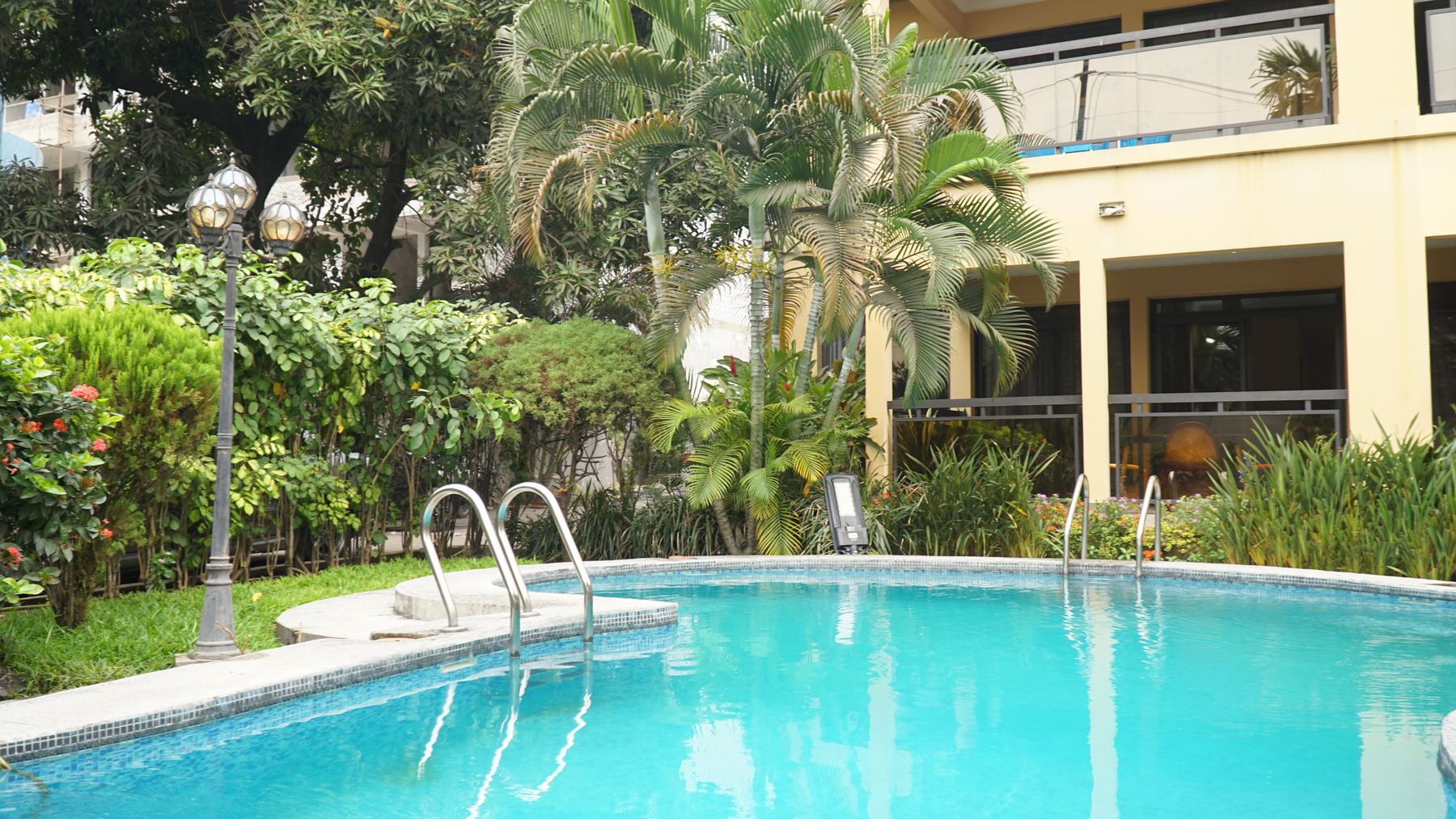
In Kinshasa, security and electricity are families’ two biggest worries: that’s why we chose secure accommodation in Limete, with guards and a generator.
Before you go: the official websites
Read the French foreign ministry’s travel advice for the DRC a few weeks before you leave, then again just before: the map of risk zones changes. Our route (Kinshasa and Kongo Central) is in the orange zone; the neighbouring provinces of Kwilu and Kwango are red. Not French? Check your own foreign ministry’s advice too.
If you’re a French national, also register on Ariane, the ministry’s free service: you enter your dates and the stages of your trip, and the embassy can warn you or reach you in a crisis. We did it, and the French embassy recommends it. Other nationalities: most foreign ministries have a similar registration service.
On the way home, at N’djili airport, plan for the Go Pass: $55 per passenger for an international flight, paid in the terminal hall before check-in. Keep the receipt, it is checked. Electronic payment is being introduced: check before the big day.
Money and phone
Big expenses are paid in dollars, small ones in Congolese francs. Nobody will turn your money down, but always keep a bit of “buffer” cash for surprises on the road.
As for phones, we had several SIM cards: coverage varies by area. The comparison of options (local SIM, eSIM) is in the guide.
Our lists
My “photocopies” folder
- Valid ID card
- Passports and visas
- Family record book
- Marriage certificate
- Letter of invitation
- Vaccination records
- It worked at every checkpoint… except Matadi.
Medicine kit: what I actually took
- Oral rehydration salts
- Paracetamol
- Anti-diarrhoea, anti-nausea and antispasmodic medicines
- Broad-spectrum antibiotic (on prescription)
- Thermometer and blood pressure monitor
- Adjust with your doctor before you leave.
Luggage and the road with kids
- Camera and drone
- Powdered milk (like Nido) and a few brioches
- Lots of water in the car
- A pack of cards, food and drink for the long drives
- The kids each had 23 kg + 10 kg: room to bring back souvenirs.
The full checklist
All the checklists are in the guide
The €29 guide includes the full pre-departure checklist, documents, medicine kit and the day-by-day Kinshasa – Muanda itinerary.
FAQ
Do you need a visa to travel to the DRC with kids?
Yes, each child needs their own visa. We paid €85 per visa, plus €95 for the letter of invitation, and did the paperwork 2 months ahead.
Which vaccines for the DRC?
Yellow fever is mandatory, with an up-to-date vaccination record. For everything else and antimalarial treatment, ask your doctor.
When should you book flights to Kinshasa?
We booked a year ahead, at €450 a ticket, for a mid-August departure.
Should you register on Ariane before travelling to the DRC?
It isn’t compulsory, but it’s free and recommended by the French embassy (for French nationals): you record your dates and stages, and you can be warned or contacted in a crisis. If you hold another passport, look for your own country’s equivalent.
What insurance should you get?
Insurance that covers repatriation in case of illness or injury. We were covered by Europe Assistance through our Visa Premier card.